
Episode 151
How Distribution Leaders Build Trust as AI Speeds Up Work
Riad Nizam, President of Master Electronics, on culture, communication, mindset, and human judgment in electronics distribution
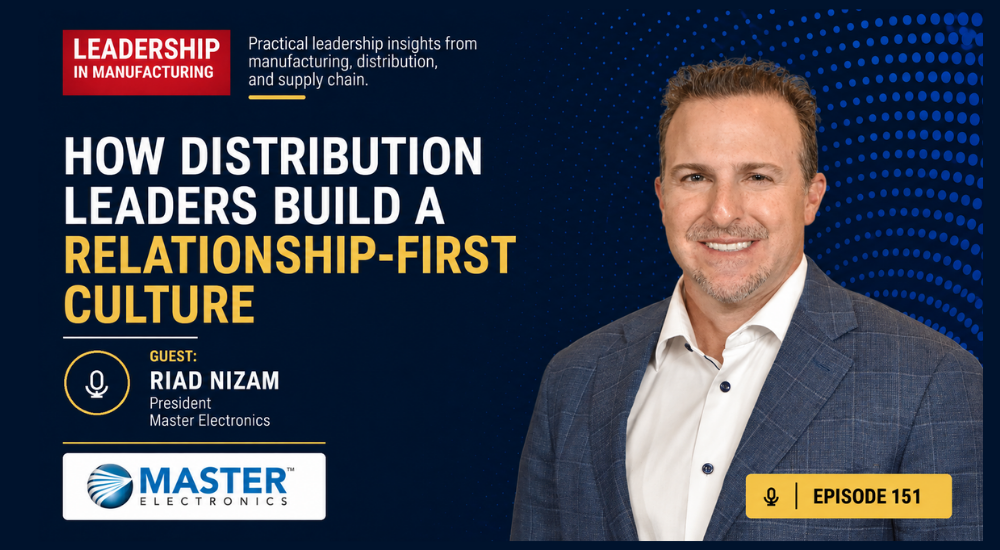
Episode summary
The short version: Electronics distribution is moving faster, and AI is adding even more speed to how teams think, communicate, and make decisions. In this episode, Riad Nizam shares how Master Electronics builds trust through culture, clear decision-making, communication, mindset, and human judgment.
Riad Nizam is President of Master Electronics, a family-owned and operated electronics distributor with more than 50 years of history. The company was founded by his father, Ike Nizam, in 1967, and continues to serve the electronics industry through strong customer and supplier relationships, responsive execution, and a relationship-first culture.
In this conversation, Riad talks about what it takes to lead inside a business where trust is built long before the hard conversation happens. He shares how Master Electronics empowers people to make decisions, how the company handles customer and supplier issues, why feedback has to move both ways, and why mindset is so important when hiring and building a team.
The episode also gets into AI in a practical way. Riad describes AI as a thought partner that helps teams think differently, bigger, and faster. But the key point is that AI does not replace judgment. Leaders still need to ask better questions, check the information, understand the risk, and make the final decision.
For leaders in electronics distribution, manufacturing, sales, product, supplier relationships, and technical teams, this episode is about how culture shows up in daily work: how people communicate, how they solve problems, how they make decisions, and how they build trust when the pace keeps increasing
What You’ll Learn
- How Master Electronics teaches people to make faster decisions without waiting for every answer from the top
- Why trust is still one of the strongest advantages in electronics distribution
- How communication breaks down between suppliers, distributors, and customers
- Why customer expectations now require more information around tariffs, compliance, supply chain, pricing, and lead times
- How AI can help teams think differently, faster, and bigger
- Why AI should help people think, not think for them
- Why mindset, humility, openness, and positive energy are hard to train if they are missing from the start
- How leaders can invite feedback by asking for it first



The Leadership Question
The real tension in this conversation is that work is speeding up across electronics distribution. Customers want more information. Suppliers need stronger communication. Teams are expected to move faster. AI is giving people new ways to test ideas, structure information, and challenge their thinking.
For distribution leaders, supplier managers, sales leaders, product leaders, and executives in technical businesses, this creates a practical leadership decision. If people are expected to move faster, they need more than urgency. They need trust, a clear decision frame, and a culture where it is safe to raise problems early.
The leadership question is:
Are you building a culture where people can move faster with better judgment, or are you creating a team that waits, avoids risk, and depends on you for every decision?
If leaders miss this, speed becomes pressure instead of progress. Teams hesitate. Problems get bigger. Customers and suppliers lose confidence. But when culture supports trust, communication, and judgment, faster work can lead to better decisions.
Key Moments From the Conversation
Trust is the real difference in distribution
Riad explains that distribution is a relationship business because many companies can sell the same components. The difference is not only the product. It is whether customers and suppliers trust the company to communicate, solve problems, and follow through.
That trust becomes visible when a customer moves to a new company and calls Master Electronics on day one, or when a supplier contact moves to another supplier and wants to bring Master into the relationship.
“If you can build trust with people, that builds a relationship and that opens communication and you’re able to solve problems quicker.”
Empowerment needs a decision frame
Riad talks about how Master Electronics uses tools like the 1-3-1 method and the Just Do It test to help employees make decisions. The test asks whether the decision is good for the employee, good for the customer, good for Master Electronics, ethical, and supportable.
The useful part is that empowerment becomes concrete. People are not just told to make decisions. They are given a way to think through the decision and learn from it.
“If you make the wrong decision, but you answer those questions, we’ll learn from it and we’ll grow and we’ll go to the next one.”
AI can speed up thinking, but people still own judgment
Riad says Master Electronics is AI forward and that AI is already helping the organization think differently, think bigger, and think faster. He describes AI as a thought partner that can challenge thinking and help teams move faster through everyday work.
But he is also clear that AI is not there to make the decision for people. It can be wrong, just like people can be wrong. The leader still has to analyze the output and own the final call.
“AI is there to help you, but not to think for you. You still have to make the final decision.”
Communication breaks down when people avoid the hard conversation
When Sannah asks where things break down between suppliers, distributors, and customers, Riad points to communication. It is often easier to email or text than to pick up the phone, join a call, or address the problem directly.
This becomes even more important when customers are dealing with price changes, lead times, tariffs, compliance, and supply chain uncertainty. Avoiding the difficult conversation usually makes the issue bigger.
“Everyone’s actually okay with issues, but what they really value is how you handle those issues, what you’re gonna do about it, how you communicate about it, and how you prevent it from happening next time.”
Mindset is hard to train later
Riad shares a practical point about culture: some skills can be taught, but the core mindset has to be present early. At Master Electronics, that means looking for people who are fast-paced, open-minded, willing to learn, willing to make mistakes, humble, and ready to find a way forward.
This is where culture starts before onboarding. Leaders can build on mindset, but if the mindset does not fit the culture from the beginning, it is difficult to create later.
.
“People that are truly humble at their core do very well at this company.”
Energy is part of leadership
Sannah and Riad also talk about energy as a leadership skill that is not always named directly. Riad says positive energy does not have to be loud. It can be quiet, steady, and genuine. The point is whether it helps lift the people around you.
They also talk about authenticity. If a leader tries to force energy in a way that does not fit them or the organization, people will feel it. The stronger move is to find a genuine way to create the tone the team needs.
.
“It doesn’t mean you have to be very outgoing to have good energy. You just have to have positive energy.”
“Leadership is not just something you learn from a textbook. It is also who you are, how you show up, and the energy you bring to the people around you.”
Practical Takeaway
Make speed safer by making the decision frame clearer.
If your team is expected to move faster, do not only tell people to make decisions. Give them a simple frame they can use before they act.
Ask:
- What decisions should people be able to make without waiting for approval?
- What questions should they answer before they act?
- What information needs to be checked first?
- What kind of mistake is acceptable if the thinking was sound?
- Where are leaders still acting as the bottleneck?
- How do you share examples of good decisions, bad decisions, and lessons learned?
When people understand the decision frame, they can move faster without guessing what leadership really wants.
About the guest
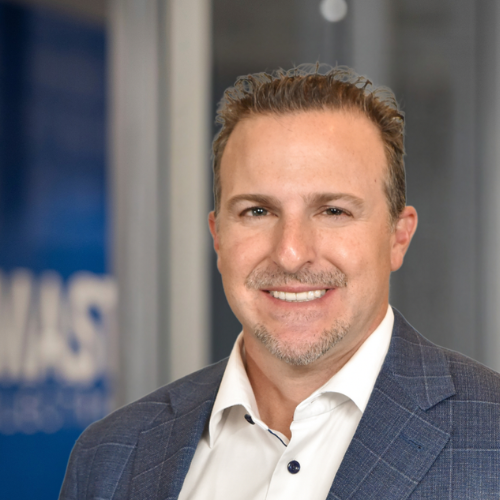
Riad Nizam
President, Master Electronics
Riad Nizam is President of Master Electronics, a family-owned global distributor serving the electronics industry for more than 50 years. He leads the company’s strategic growth, customer and supplier relationships, and culture of speed, flexibility, and execution.
With more than 20 years at Master Electronics, Riad has held leadership roles across sales, product management, operations, and general management. He has helped scale the business while maintaining the values established by his father, Ike Nizam, who founded the company in 1967.
Riad is also a keynote speaker and advocate for family businesses. He speaks about leadership, culture, entrepreneurship, succession, and building organizations where accountability and care for people coexist. Outside of work, he supports the Ike Nizam Foundation, including scholarship programs for Master Electronics employees’ children and grandchildren.
Guest LinkedIn: https://www.linkedin.com/in/riadnizam
Episode Chapters
-
00:00 AI, positive energy, and what makes a good leader
-
02:01 Visible or Invisible book announcement
-
02:41 Welcome to Leadership in Manufacturing
-
03:08 Meet Riad Nizam of Master Electronics
-
04:23 Passion for electronics distribution
-
06:09 Building empowerment into company culture
-
07:26 Creating a culture where people can make decisions
-
08:20 How Riad’s leadership style has changed
-
10:30 Why trust drives distribution relationships
-
12:30 The power of brand and reputation
-
13:15 How companies should handle problems
-
14:34 Where communication breaks down
-
16:32 Creating a culture where people raise problems
-
17:53 What customers need from distributors today
-
18:57 How AI is helping Master Electronics
-
20:59 AI should help you, not think for you
-
22:20 Learning to slow down and think more carefully
-
23:39 How Riad continues to learn
-
24:46 What defines a good leader
-
26:54 The role of positive energy in leadership
-
29:18 Hiring for mindset and cultural fit
-
32:15 Communication lessons for the next generation
-
34:41 Making feedback easier to give and receive
-
36:59 Employee surveys and shared responsibility
-
38:15 The latest skill Riad learned: coding
-
40:13 Why leaders need to care about people personally
-
42:16 Personal check-ins and creating connection
-
44:37 Making leadership authentic
-
46:02 Advice Riad would give his younger self
-
48:05 Closing thoughts
Who this episode is for
-
- Distribution leaders building faster, more trusted teams
- Sales leaders managing customer expectations and communication gaps
- Supplier and product leaders working across channel relationships
- Executives in family-owned or founder-led technical businesses
- Managers trying to build a feedback culture that feels real
- Leaders exploring AI while keeping human judgment in the loop
- Rising leaders learning how trust, energy, and mindset shape culture
What you will be able to do after listening
-
- Build a clearer decision frame for your team
- Identify where communication breaks down before issues grow
- Reframe trust as a daily operating behavior, not only a relationship outcome
- Ask better questions when inviting feedback from direct reports
- Think about AI as a tool for better thinking, not a replacement for judgment
- Recognize why mindset and humility are hard to train later
- Create more intentional space for quieter voices in meetings
You can unsubscribe at any time.*
Related Episodes
Why Leadership Is Built in the Moments Nobody Sees- Episode 152
Colin Strother, Executive Vice President at Rochester Electronics, joins Sannah Vinding to discuss trust, authenticity, customer commitment, and leading global teams across the electronics industry. They talk about why customers need both digital and personal service, how leaders develop confidence and composure, and what small actions reveal about leadership.
Why Good Managers Build Trust Before They Need It – Episode 150
Nate Witsaman of DigiKey joins Sannah Vinding to discuss curiosity, trust, feedback, remote leadership, and developing managers.