Episode 135
How Leaders Modernize the Manufacturers Rep Role Using AI and Smarter Workflows
Using AI to prepare better, respond faster, and stay relevant




Episode summary
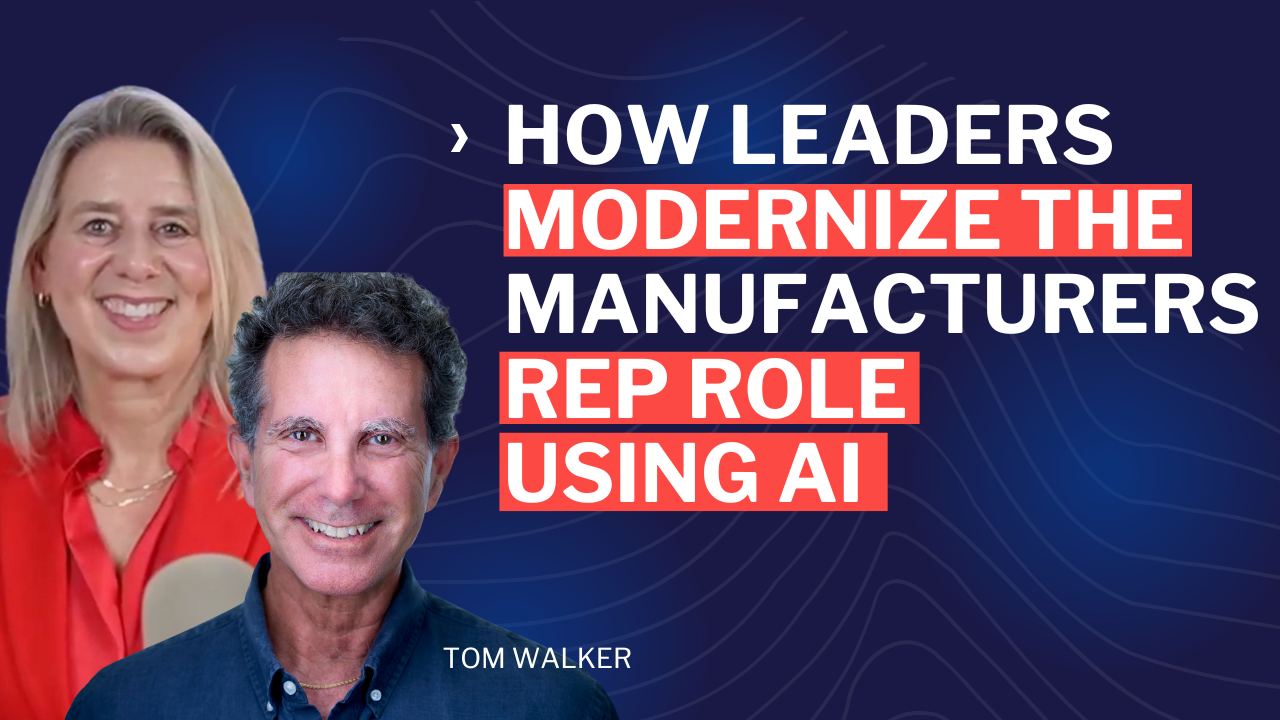
In Episode 135 of the Leadership in Manufacturing Podcast, host Sannah Vinding sits down with Tom Walker, Co-Founder and Vice President of Spectron Components, for a practical conversation on how the manufacturer’s rep role is evolving and what it takes to stay relevant today. This is Part 1 of a two-part conversation.
This episode explores how limited access, higher expectations, and longer sales cycles are forcing reps to rethink how they operate. Tom shares how his team has shifted from traditional technical support and relationship-only selling to a more intentional, data-driven approach that blends AI, smarter workflows, and targeted outreach without losing the human side of the business.
Rather than treating AI as a buzzword or shortcut, the conversation focuses on how AI supports better preparation, faster response times, and more precise account targeting. Tom also explains why old-school tactics like physical mail still work when used thoughtfully, and how combining digital tools with personal follow-through builds trust with both customers and principals.
This episode is for leaders across manufacturing, distribution, and the manufacturer’s rep community who want a realistic view of how sales and marketing execution is changing, and how to adapt without overwhelming teams or eroding relationships.
You Will Learn
-
-
-
How the manufacturer’s rep role has changed due to limited access and shifting expectations
-
Why reps are becoming hunters and technical marketers, not just relationship managers
-
How AI can be used to identify target accounts and verify contacts faster
-
Why speed and preparation change conversations with principals and customers
-
How blending digital tools with physical touchpoints builds trust and recall
-
What working smarter looks like without sacrificing the human element
-
-
Listen now and subscribe to Leadership in Manufacturing.
Key takeaways
The Manufacturer’s Rep Role Has Fundamentally Changed
Access to customers is more limited and expectations are higher. Reps can no longer rely on walk-ins or relationship-only selling. The role has shifted toward proactive hunting, preparation, and targeted outreach.
“Our role has changed from being technical sales and support to becoming hunters.”
Speed and Preparation Change the Conversation
Being able to respond quickly with relevant accounts, verified contacts, and clear context builds credibility with both customers and principals. Preparation now matters as much as presence.
“When you can respond in minutes instead of days, it completely changes the conversation.”
AI Works Best as a Focus Tool, Not a Buzzword
AI delivers value when it is used to narrow focus, filter noise, and support better decisions. Custom GPTs and workflows help reps identify the right accounts and contacts without replacing judgment or relationships.
“AI helps us be more precise and efficient. It doesn’t replace the relationship.”
Old-School Tactics Still Work When Used Intentionally
Physical mail, leave-behind guides, and curated content still get attention when they are targeted and relevant. Combining digital tools with thoughtful physical touchpoints increases recall and lowers resistance.
Reps Are Becoming Technical Marketing Partners
Modern reps support principals not just through sales activity, but through marketing execution, account targeting, and reporting. Owning this workflow helps demonstrate ROI and strengthens rep–principal relationships.
Working Smarter Preserves the Human Element
Smarter workflows free up time for face-to-face conversations, problem-solving, and follow-through. Efficiency is not about doing more outreach, but about doing the right work with intention.
Leadership Shows Up in Execution
Tools amplify behavior. They do not replace responsibility.
In this episode, leadership shows up through preparation, follow-through, and accountability. How reps use data, AI, and workflows day to day determines whether trust is built or lost with customers and principals.
Modern rep leadership is less about titles or vision statements and more about showing up informed, responding quickly, and doing the work that removes friction for everyone involved.
“Working smarter shows up in preparation. When you’re ready, the conversation changes.”
Why this matters
The way manufacturers, distributors, and manufacturer’s reps operate is changing faster than many organizations realize. Access is harder. Teams are leaner. Customers expect faster answers with more context.
This episode highlights a practical shift. AI and automation create value only when they support better preparation, clearer communication, and stronger execution. The advantage does not come from using more tools. It comes from using the right tools with intention.
For leaders across manufacturing, distribution, and the rep community, this conversation offers a realistic roadmap for modernizing how work gets done without losing trust, relevance, or the human element that still drives results.
“The advantage isn’t using more tools. It’s using the right ones to remove friction and move faster.”
Episode highlights
Why the Manufacturer’s Rep Role Has Fundamentally Changed
- Limited access, leaner teams, and longer sales cycles have reshaped what it means to be an effective manufacturer’s rep. Success today depends less on physical presence and more on preparation, relevance, and follow-through.
How AI Helps Reps Work Smarter Without Losing the Human Element
- AI is not replacing relationships in this episode. It is used to improve targeting, speed up research, and help reps show up informed. The focus is on using AI to arrive prepared, not automated.
Why Speed and Preparation Create Real ROI
- Responding in minutes instead of days changes how principals and customers engage. This conversation shows how verified targets, clear context, and faster responses immediately increase credibility and trust.
Why Old-School Tactics Still Matter When Used Intentionally
- Physical mail, follow-up, and in-person visits still work when they are targeted and relevant. The episode highlights how combining digital workflows with tangible touchpoints improves recall and engagement.
What Leadership Looks Like in Day-to-Day Execution
- Leadership in a modern rep organization shows up through preparation, accountability, and consistency. Tools only create value when they support better execution and remove friction from real work.
Practical Tip
Build One “Preparation-First” Habit Using AI
Instead of trying to modernize everything at once, pick one place where preparation consistently breaks down and use AI to support it.
For example:
-
-
Identify and qualify target accounts before outreach
-
Verify engineering and purchasing contacts ahead of meetings
-
Create a one-page customer brief before a call or visit
-
Then clearly define:
-
-
When AI should be used in the process
-
What information still requires human validation
-
How the output should be shared or acted on
-
AI delivers value when it reduces friction before conversations start.
Preparation builds credibility.
Speed builds trust.
About the guest

Tom Walker
Co-Founder, Vice President, Spectron Components
Tom Walker is the co‑founder of Spectron Components, an award‑winning manufacturers’ representative firm consistently ranked among the top electronic component rep firms in Southern California. With more than 39 years of experience, Tom has built a career connecting electronic component manufacturers with OEM design engineers and buyers, helping turn good designs into products that ship.
Tom specializes in product marketing, sales branding, target account development, and navigating the electronic component design and supply chain process. He is known for matching the right suppliers with the right customers, helping manufacturers grow market share while helping OEMs move their products into production faster.
His technical strengths center on electromechanical component solutions for PCBs and front‑ and back‑panel designs. While audio components are a personal favorite, Tom brings deep knowledge across a wide range of products, including connectors (including RF), enclosures, switches, wire and cable, hardware, circuit protection, potentiometers, encoders, batteries, power supplies, thermal solutions, frequency controls, relays, and passives.
Tom is passionate about helping customers get products to market faster through practical, well‑matched electronic component solutions for modern electromechanical designs.
Who this episode is for
This episode is built for:
-
-
-
Manufacturer’s reps navigating limited access and rising expectations
-
Leaders in manufacturing and distribution working closely with rep partners
-
Sales and marketing leaders modernizing how accounts are targeted and supported
-
Principals who want to understand what effective rep partnerships look like today
-
Organizations balancing AI, data, and workflows with trust and human relationships
-
-
What you will be able to do after listening
After listening to this episode, you will be able to:
-
-
-
Understand how the manufacturer’s rep role is changing due to limited access and higher expectations
-
Use AI to improve preparation, account targeting, and contact discovery without losing the human element
-
Recognize how speed and verified information change conversations with principals and customers
-
Blend digital tools with physical and in-person tactics more intentionally
-
Evaluate rep effectiveness based on preparation, relevance, and outcomes rather than activity volume
-
Identify where smarter workflows reduce friction before conversations even begin
-
-
You can unsubscribe at any time.*
Related Episodes

Why Judgment Still Wins in an AI-Assisted Sales World – Episode 138
Hunter Starr, CPMR, shares how reps use AI for faster research and cross-referencing while relationship, judgment, and follow-through still drive results in technical sales.
How to Lead When the Rules Change Between Startup and Enterprise – Episode 137
Episode 137 with Chris Lanier of Exein, how to lead effectively as your organization grows, shrinks, or transforms, and why trust is the most practical leadership tool available.