Episode 133
How Leaders Turn Technical Data Into Faster Sales Answers Using AI
Why Leadership Cannot Be Automated
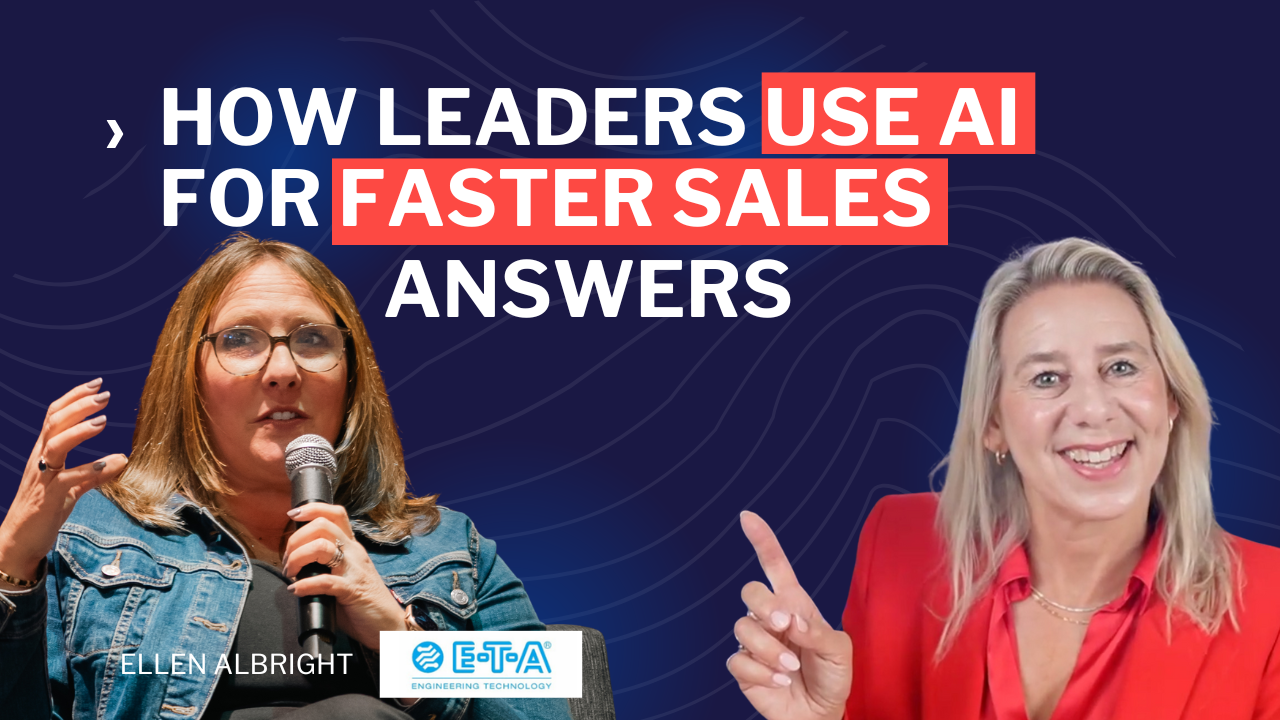




Episode summary
In Episode 133 of the Leadership in Manufacturing Podcast, host Sannah Vinding speaks with Ellen Albright, Marketing and Communications Director at E-T-A Engineering Technology, about how leaders can implement AI in practical, people-first ways.
This episode explores a real-world example of building an internal AI agent to support sales and engineering teams by turning technical data into faster, more reliable answers. Rather than chasing trends, the conversation focuses on governance, trust, and alignment with business objectives.
Drawing from Ellen’s experience leading AI pilots and an internal AI task force, the discussion highlights why AI adoption is as much a leadership and change management challenge as it is a technology decision. Leaders will hear how to introduce AI without overwhelming teams, losing accountability, or eroding trust.
This episode is for leaders in manufacturing, electronics, and supply chain who want to move beyond experimentation and use AI to improve efficiency, customer experience, and collaboration across teams.
You Will Learn
-
- How leaders build internal AI agents to support sales and engineering teams
- Why AI works best as a first step, not a final answer
- How governance and training shape successful AI adoption
- Where human judgment and validation remain essential
- How to align AI initiatives with real business goals, not trends
Listen now and subscribe to Leadership in Manufacturing.
Key takeaways
AI Works Best as a First Step, Not the Final Answer
AI agents are most effective when they help teams find information faster and reduce interruptions. They accelerate access to technical data, but human validation and judgment must remain part of the process.
“AI should help people get to the right information faster, not replace the need to think critically about the answer.”
Governance Matters More Than Tools
Without clear guidelines, AI adoption quickly turns into distraction. Leaders must define what AI should be used for, what data is allowed, and when human review is required.
“We had to step back and ask what problems we are actually trying to solve, not just which tools looked interesting.”
Training People Is as Important as Training AI
Teams need to understand what questions AI can answer and when it should not be used. Successful adoption depends on education, expectations, and trust, not just technology.
“The tool is never going to be one hundred percent correct. People still need to validate what they see.”
Why this matters
AI adoption is accelerating across electronics manufacturing, distribution, and supply chain. But the biggest risks are not technical. They are leadership risks.
This episode highlights a critical lesson for modern leaders. AI delivers value when it is aligned with business goals, supported by governance, and introduced in a way that builds trust instead of confusion. When leaders treat AI as a support system rather than a shortcut, teams move faster, customers get better answers, and engineering expertise stays protected.
“AI can help us move faster, but leadership is still responsible for clarity, trust, and accountability.”
Episode highlights
How Leaders Use AI Agents to Accelerate Technical Answers
- AI agents can reduce interruptions and speed up access to technical information for sales and engineering teams. This episode shows how leaders use AI as a first stop for answers while keeping human expertise in the loop.
Why Governance Is Critical for AI Adoption
- Without clear guidelines, AI quickly becomes a distraction. This conversation highlights why leadership must define what AI should be used for, how data is handled, and when human validation is required.
How Training Teams Makes AI More Effective
- Successful AI adoption depends on teaching people how and when to use the tool. Leaders must help teams understand what questions AI can answer and when critical thinking must take over.
Why AI Adoption Is a Leadership Challenge, Not a Technology Problem
- Implementing AI is less about software and more about change management. This episode explores how trust, communication, and clarity determine whether AI helps or hinders teams.
What Practical, People First AI Leadership Looks Like
- This episode reinforces a core leadership principle. AI should support speed and efficiency, but people remain responsible for judgment, accountability, and customer experience.
Practical Tip
Start With One AI Use Case, Not Ten
Choose one clear problem where AI can immediately reduce friction, such as answering technical product questions, summarizing documentation, or routing internal requests. Define AI as the first stop, not the final authority.
Be explicit with your team:
-
When to use the AI tool
-
What types of questions it can answer
-
When human validation is required
Clarity builds confidence.
Boundaries protect expertise.
This approach helps teams adopt AI faster while preserving judgment, trust, and accountability.
About the guest

Ellen Albright
Marketing & Communications Director E-T-A Engineering Technology
Ellen Albright is a marketing and communications leader with over 20 years of experience driving business growth through strategic, data‑driven marketing. She currently serves as Marketing & Communications Director at E‑T‑A Engineering Technology, a global manufacturer of circuit protection and control products, where she has spent more than two decades building and strengthening the company’s brand, demand generation, and customer engagement efforts.
In her role, Ellen leads integrated marketing programs across digital, automation, product launches, web, events, and distributor collaboration. She works closely with engineering, sales, and customer service teams to translate technical products into clear, compelling value for customers and partners. Her background includes deep expertise in digital strategy, marketing automation, online marketing, market planning, and performance measurement.
Known for her collaborative approach and practical mindset, Ellen is passionate about using insight, creativity, and measurable strategy to build strong brands, align teams, and deliver results
Who this episode is for
This episode is built for:
-
-
Leaders implementing AI in sales, engineering, or manufacturing teams
-
Executives responsible for technical knowledge, efficiency, and customer experience
-
Managers introducing AI tools without overwhelming their teams
-
Organizations balancing automation with human expertise and trust
-
Leaders focused on practical, people-first AI adoption in complex industries
-
What you will be able to do after listening
After listening to this episode, you will be able to:
-
-
-
Identify where an AI agent can realistically support sales and engineering teams
-
Define clear boundaries between AI support and human judgment
-
Introduce AI tools in a way that builds trust instead of resistance
-
Align AI initiatives with real business goals, not trends
-
Improve access to technical knowledge without overwhelming experts
-
Lead AI adoption as a change management initiative, not just a technology rollout
-
-
Leadership in Manufacturing Newsletter:
Join the 4,100+ professionals in the electronics manufacturing industry who rely on our insights.
Developing Future Leaders!
* By subscribing, I consent to receive email updates.
Related Episodes
How to Lead When the Rules Change Between Startup and Enterprise – Episode 137
Episode 137 with Chris Lanier of Exein, how to lead effectively as your organization grows, shrinks, or transforms, and why trust is the most practical leadership tool available.
How to Build Trust as a Modern Rep Using AI to Prep Smarter Conversations – Episode 136
Part 2 with Tom Walker on how modern manufacturers reps use AI to build trust, strengthen culture, and stay relevant in a changing sales environment.